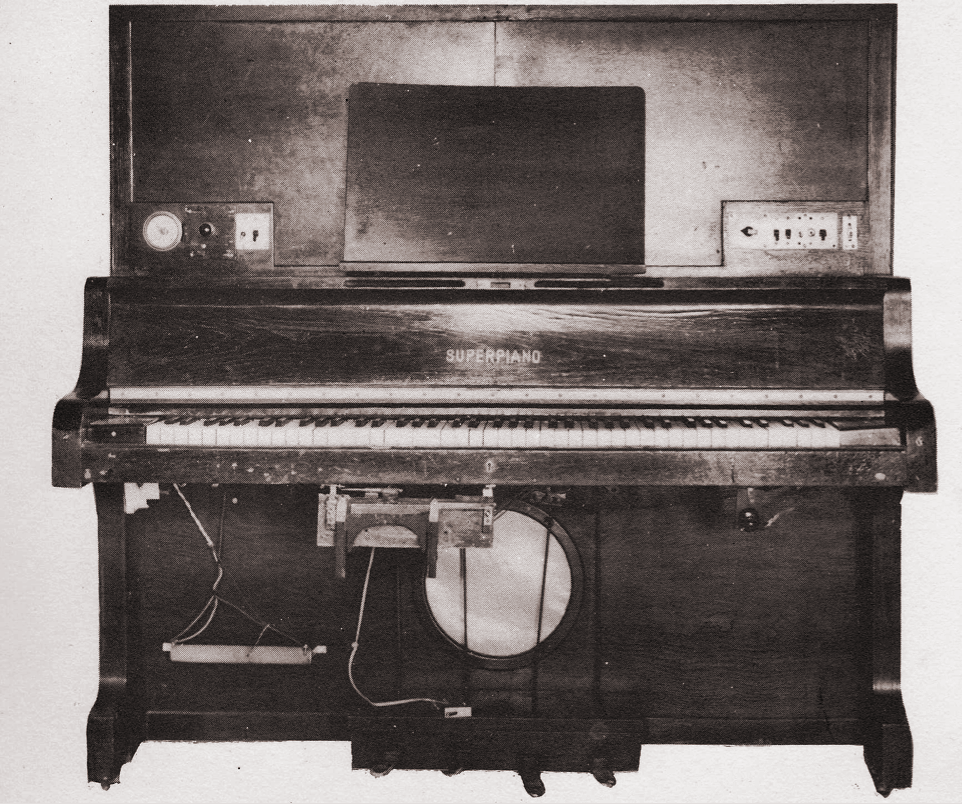
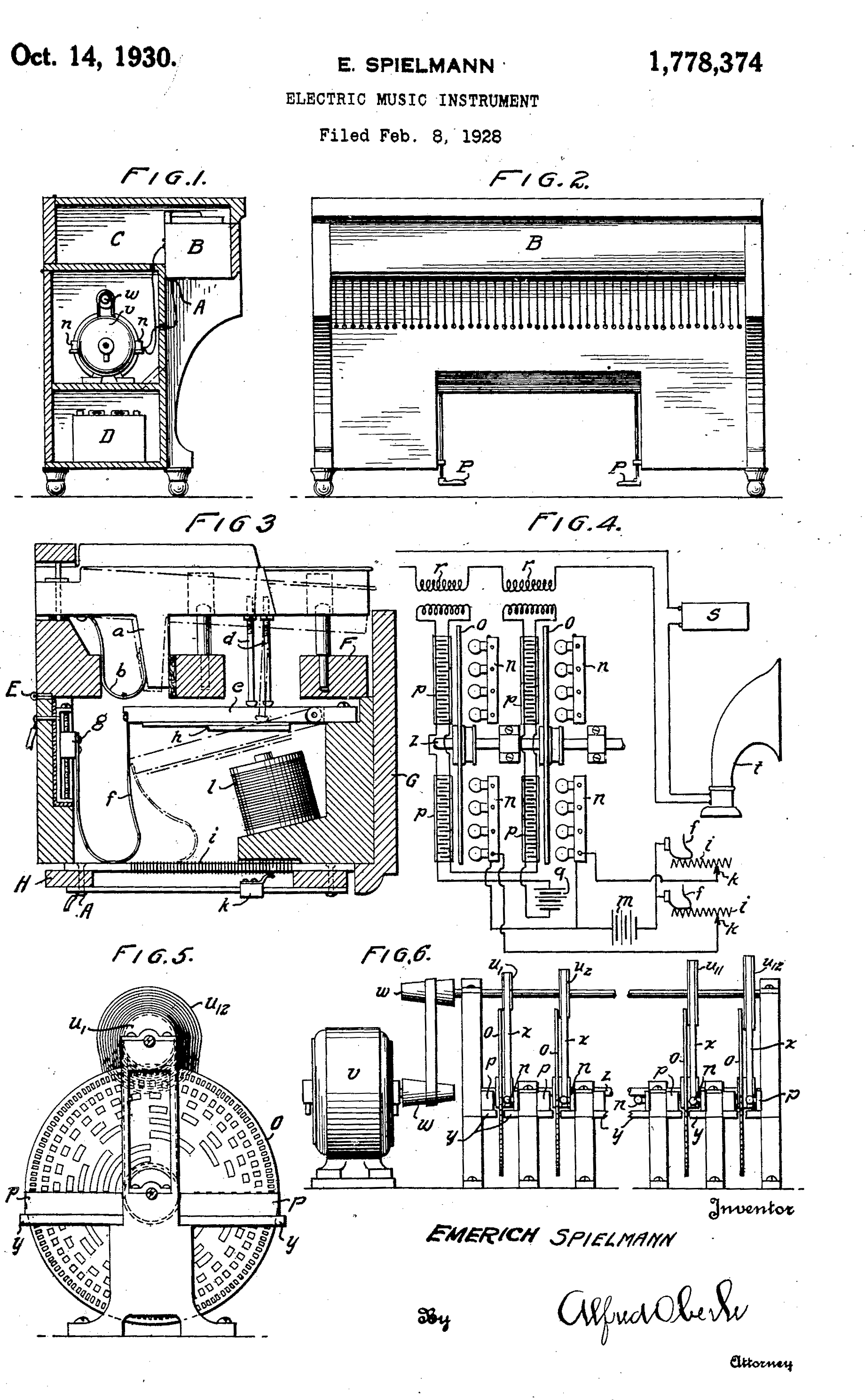
Spielmann’s Superpiano, patented in 1927, was a keyboard instrument based on the photo-optical principle used in a number of instruments during the 1920s and 30s: the Cellulophone, the Radio Organ of a Trillion Tones, ‘Sonothèque’, the Welte Licht-ton Orgel and others. In general, this principle worked by projecting a light beam through a spinning glass disk onto a photoelectric cell. The regular interruption of the light beam causes an ‘oscillating’ voltage tone. Spielmann’s innovative instrument used two rows of twelve black, photographically reproduced celluloid disks. Each disk had a series of holes cut in seven concentric circles equating to the waveforms of the seven octaves of a note – the light beam being picked up by selenium photo-electrical cells.

The Superpiano created complex tones by allowing a combination of ‘pure’ and harmonic sound waves of the same note; each note was duplicated with contrasting sound waves and harmonics – hence two rows of twelve disks – allowing the player to mix the sound waves of each note with a knee lever. Volume control was achieved by adjusting the pressure on the manual keyboard via variable resistors, thereby dimming and increasing the lightbulb brightness and, consequently, the note volume. The instrument’s overall pitch can be adjusted during play by varying the speed of the rotating disks. Spielmann intended the Superpiano to be used as an affordable ($300) home keyboard which could be played like a piano but also a type of early sampling keyboard – ‘drawings’ of different instruments’ waveforms could be made on the celluloid disks, allowing the player to reproduce the “entire instrumental range of an orchestra” – or so the advertising claimed.

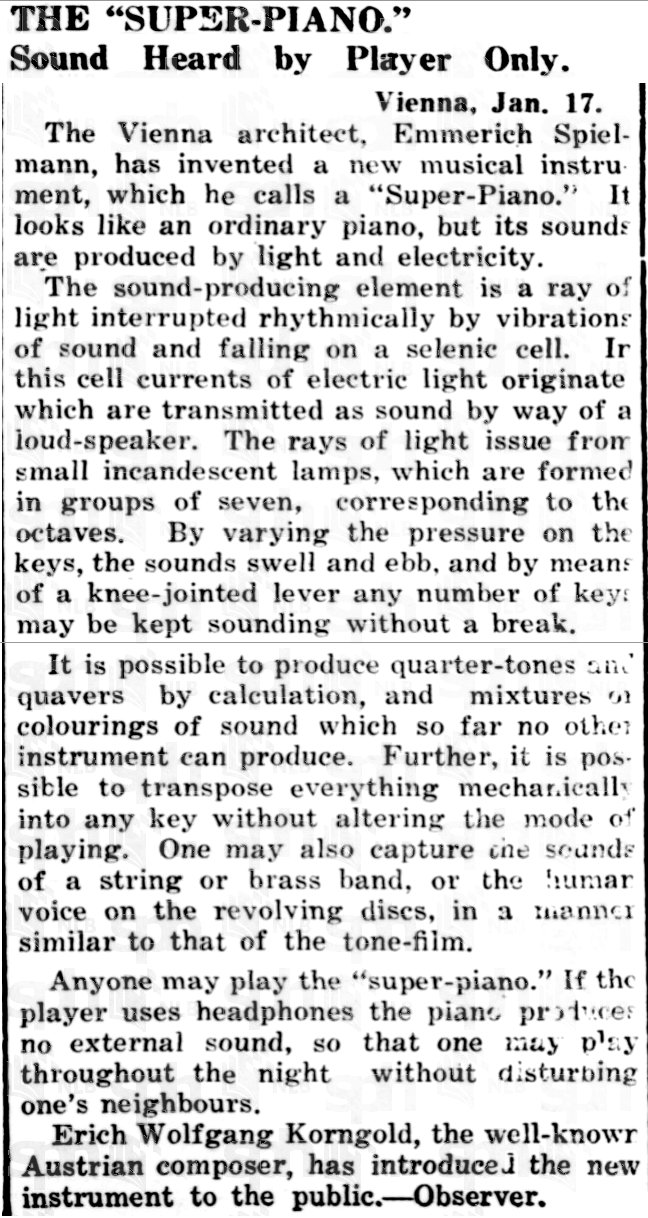
Spielmann’s instrument made its debut on January 9, 1929, at a concert organised by the Österreichische Kulturbund (Austrian Culture Union), performed by the renowned composer and pianist Erich Wolfgang Korngold, who played the piano with one hand and the Superpiano with the other. Later, on February 14, 1929, Spielmann presented the Superpiano on the Vienna radio station RAVAG, featuring lectures titled ‘Das Licht spricht, das Licht musiziert’ (Light speaks, light makes music).
“The piano has undisputedly dominated as a household instrument for more than 150 years. It owes its position to its ability to play polyphonically with sounds in which each individual note can be dynamically differentiated by attack, in contrast to the organ and harmonium. While the piano only enables polyphonic playing, the super piano also brings polychrome, sound-rich music. Not only can you sound many tones on the super piano, but you can also make every note sound with all the dynamic shades for as long as you want, unlike on the piano. This is why orchestra-like effects can be achieved on the super piano with a sound design that is analogous to singing. […] In the super piano, the tones of different timbres are produced synthetically. They represent the end product of a mixture of a tone without overtones and a tone rich in overtones, which can be easily achieved by the player by moving a toggle lever, which is produced using a light electric system by two sound disks running next to each other and effective at the same time. Continuously moving the lever from left to right allows the sound to slowly transition from the flute character to the string character and from there to the brass character. For the time being, I have refrained from constructing a multiple super piano on which a single musician could produce several timbres simultaneously in polyphonic playing and am avoiding the technical difficulty of polyphonic and polychrome playing by making music on two or more instruments, each of which is different Producing tonal colors in rich alternation, together contributing to create the impression of great tonal richness. Even if the ear thinks it can hear the sound of an organ, flute, violin, cello, timpani by comparing it with the sound of the traditional instruments from the superpiano, the superpiano neither wants to imitate nor replace the old instruments. But there is the possibility of revitalising the old music literature with a new richness of tone and expression, and it can open up new avenues for new music.”
1 Spielmann, Emerich (1933) WIE ICH DAS SUPERPIANO ERFAND, Radio Wien, 31 March 1933, 3.
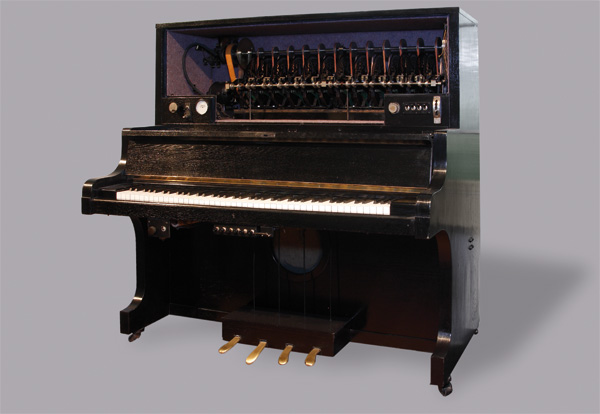
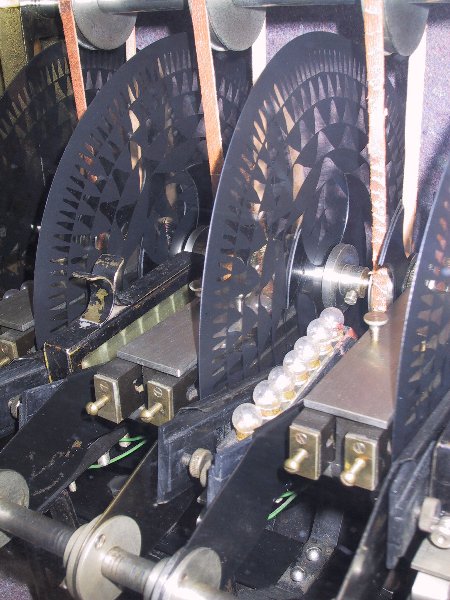
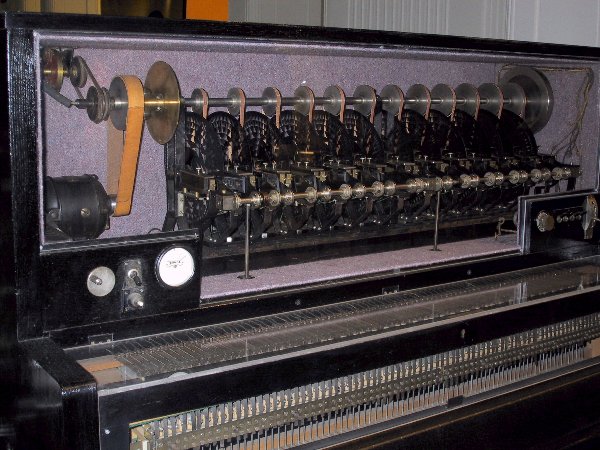
Several instruments appear to have been built, but only one survived the ravages of WW2 and was sold to the Vienna Technical Museum in 1947. Spielmann developed a modification of the Superpiano called the Symphonium, where the Superpiano used organ-like sounds, the Symphonium was based on mixable combinations of orchestral sounds: woodwind, brass and strings, allowing fifteen possible combinations of timbres (to the Superpiano’s two). 2 Donhauser, Peter (2007), Elektrische Klangmaschinen: Die Pionierzeit in Deutschland und Österreich, Böhlau, Wien, 57–60.
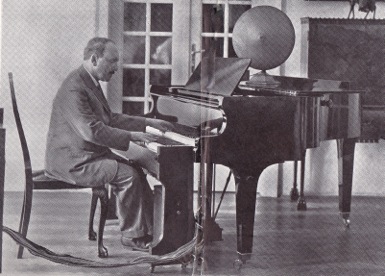
With the seizure of power by the National Socialists in Austria and Germany in 1933, the Superpiano project was disrupted, and the instrument failed to become a commercial proposition. As an Austrian Jew, Spielmann’s situation became increasingly precarious; his license to practice as an architect was revoked in 1938. Spielmann fled to London with his daughter Anni, and then to New York, where he became a naturalised US citizen in 1944. Spielmann appears to have continued the project in the USA, but the instrument was likely overshadowed by the Welte LichttonOrgel, which used similar technology (also Jewish escapees to New York), and by the dominance of the Hammond Organ in the home instrument market.




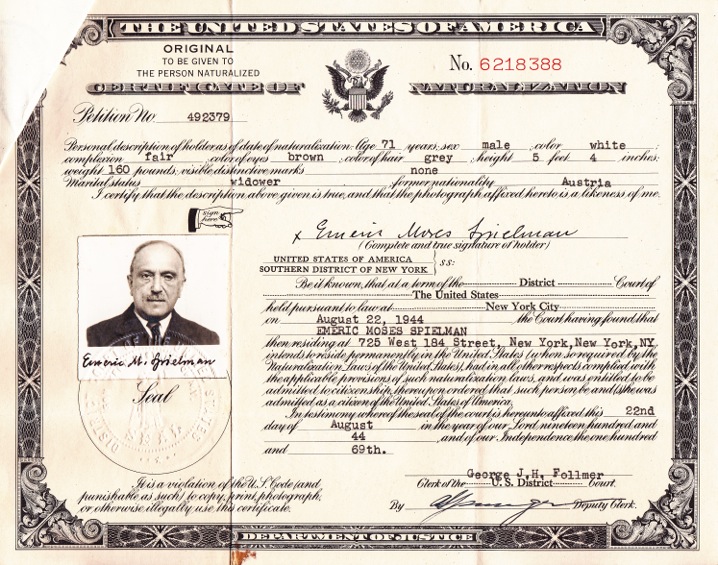
Emerich (Ernst) Moses Spielmann – 23.06.1873 Vienna, Austria – 1952 Elmhurst, Queens, New York, USA. Biographical notes
Emerich Spielmann was a Viennese architect born in Moravia to a Jewish family in the mid-19th century. His father was a merchant, Hermann Spielmann (1842-1925), and his mother was Josephine Franzos (1850-1918). Spielmann studied at the Institute of Technology at King Karl and Karl Mayr Eder from 1892 to 1899. He then worked until 1903 in the architectural practice of Wilhelm Stiassny and Friedrich Ohmann. In 1904, he began a collaboration with the architect Alfred Teller, working in the Viennese Secessionist style and later in neo-Baroque and classical forms, until 1932, when he worked independently in his own practice. As a Jew, in 1938, Spielmann’s license to practice was revoked by the Nazi authorities. He fled to London in 1939 with his daughter Anna on May 6 and arrived on August 22, 1944, in New York, where he became a naturalised citizen in 1944. He died in New York in 1952. 3Prokop U. (2016). On the jewish legacy in viennese architecture : the contribution of jewish architects to building in vienna 1868-1938. Böhlau. Retrieved December 2 2023, from http://www.oapen.org/download?type=document&docid=612510. and archive of Regina Spelman, Deborah Lucas, Dan Lucas
references:
- 1Spielmann, Emerich (1933) WIE ICH DAS SUPERPIANO ERFAND, Radio Wien, 31 March 1933, 3.
- 2Donhauser, Peter (2007), Elektrische Klangmaschinen: Die Pionierzeit in Deutschland und Österreich, Böhlau, Wien, 57–60.
- 3Prokop U. (2016). On the jewish legacy in viennese architecture : the contribution of jewish architects to building in vienna 1868-1938. Böhlau. Retrieved December 2 2023, from http://www.oapen.org/download?type=document&docid=612510. and archive of Regina Spelman, Deborah Lucas, Dan Lucas
Sehr geehrter Herr Donhauser,
Zufällig habe ich diese Seite gefunden, auf der mein Großvater Emerich Spielmann beschrieben wird. Er wanderte 1939 nach die USA aus und wurde 1944 amerikanischer Staatsbürger. Er starb um 1952 – das genaue Datum muss ich noch herausfinden. Falls es Sie interessiert, sende ich Ihnen Fotos meines Großvaters am Superpiano. Insgesamt hat er 2 Musikinstrumente gefertigt. Grüsse aus Hamburg
Regina Spelman
Was für eine interessante Geschichte! Ich interessiere mich sehr für Ihren Großvater und Ihre Großfamilie. Ich recherchiere das Leben des Cousins Ihres Großvaters, des Opern- und Operettensängers Julius Spielmann (1866-1920). Wenn Sie diese Nachricht sehen, können Sie mich kontaktieren juliusspielmannbio@gmail.com
What an interesting story! I am very interested in your Grandfather and your extended family. I am researching the life of your Grandfather’s cousin, the opera and operetta singer Julius Spielmann (1866-1920). If you see this message, you can contact me juliusspielmannbio@gmail.com